Vietnamese Spring Roll Recipe With Mango-Avocado
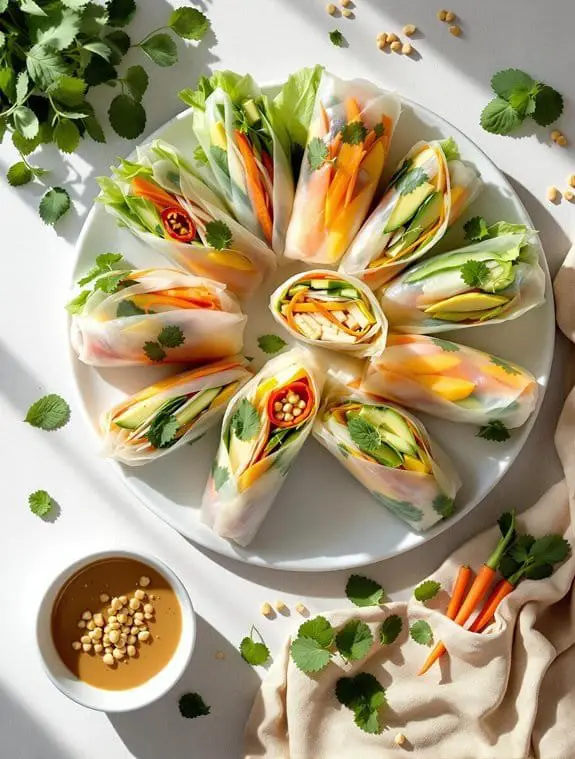
I’ll admit it – I’m terrible at keeping fresh herbs alive, but somehow I always manage to have perfectly ripe mangoes sitting on my counter when I least expect them. That’s when these Vietnamese spring rolls become my saving grace, because let’s be honest, there’s something almost magical about wrapping silky rice paper around creamy avocado and sweet mango chunks. The combination sounds simple enough, but there’s actually a sneaky technique that makes all the difference.
Why You’ll Love these Vietnamese Spring Rolls with Mango-Avocado
When you bite into these fresh Vietnamese spring rolls, you’ll understand why they’ve become my go-to light meal that never leaves me feeling heavy or sluggish.
The creamy avocado melts against sweet mango chunks, while crisp vegetables add that satisfying crunch I crave.
What makes these rolls special? The combination of textures keeps every bite interesting. Soft vermicelli noodles wrap around tender tofu strips, fresh herbs brighten everything up, and that translucent rice paper wrapper holds it all together like edible gift wrap.
They’re basically summer on a plate, minus the sunburn.
What Ingredients are in Vietnamese Spring Rolls with Mango-Avocado?
These Vietnamese spring rolls pack an impressive array of fresh ingredients that come together like a perfectly choreographed dance. Each component plays its part, from the chewy noodles that anchor everything to the herbs that make your taste buds sing.
The beauty of this ingredient list lies in its simplicity and accessibility. You can find most of these items at your regular grocery store, though the rice paper might require a quick trip to the international aisle or Asian market.
Ingredients:
- 4 oz vermicelli noodles
- 8 large rice paper wrappers
- 1 carrot, julienned
- ½ English cucumber, julienned
- 3 oz extra-firm tofu, cut into strips
- 1 jalapeño, seeded and sliced
- 1 mango, peeled and sliced
- 1 avocado, sliced
- Fresh basil leaves
- Fresh mint leaves
- Fresh cilantro leaves
- Peanut sauce for dipping
Ingredient Notes and Substitutions
The vermicelli noodles are those thin, translucent rice noodles that become soft and slippery when cooked. Don’t confuse them with the thicker rice stick noodles, though honestly, the world won’t end if you do.
Rice paper wrappers can be tricky little things. Look for the round, hard discs that feel like they might shatter if you look at them wrong. They transform into pliable, slightly sticky wraps once you give them a warm water bath.
For the tofu, extra-firm is your best friend here. The soft stuff will fall apart faster than my resolve at a bakery. If you’re not a tofu fan, cooked shrimp or thin strips of cooked chicken work beautifully.
The mango should be ripe but still firm enough to slice cleanly. Same goes for the avocado, though we all know how avocados have their own mysterious timeline that defies human understanding.
Fresh herbs make all the difference, so skip the dried stuff if possible. If you can only find two of the three herbs, the world will keep spinning, but try to get at least mint and cilantro for that authentic flavor punch.
How to Make these Vietnamese Spring Rolls with Mango-Avocado
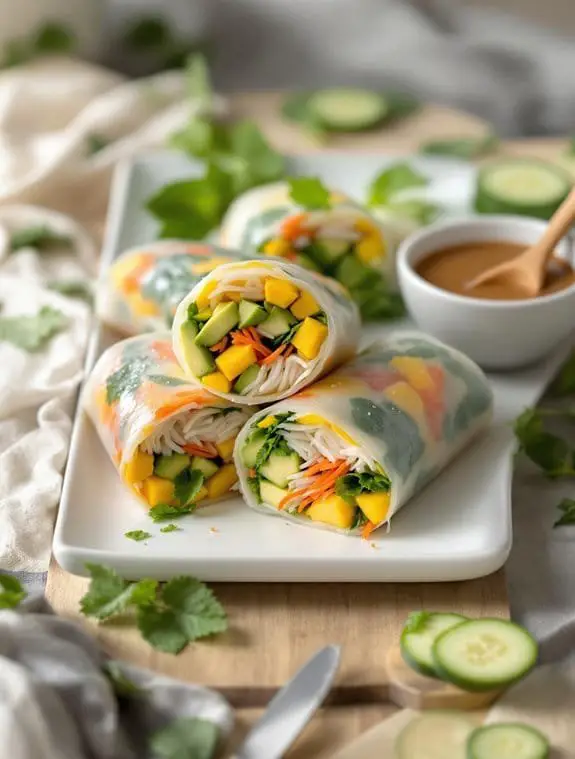
Making these Vietnamese spring rolls is like assembling tiny, edible gifts that happen to taste incredible. The process might feel awkward at first, especially if you’re new to working with rice paper, but once you get into a rhythm, you’ll be rolling like a pro.
Getting Everything Ready
Start by cooking your 4 oz of vermicelli noodles according to the package directions. These thin rice noodles usually need just a few minutes in boiling water before they’re perfectly tender. Drain them well and let them cool completely while you prep everything else, because nobody wants hot noodles making their rice paper fall apart.
While those noodles chill out, get all your vegetables and other ingredients prepped and arranged within easy reach. Julienne that 1 carrot and ½ English cucumber into thin matchstick pieces. Cut your 3 oz of extra-firm tofu into strips, and slice up your jalapeño after removing the seeds, unless you enjoy crying while you eat.
Peel and slice the mango, slice the avocado, and pick your fresh basil, mint, and cilantro leaves from their stems.
The Rice Paper Dance
Here’s where things get interesting, and by interesting, I mean potentially frustrating if you rush it. Fill a large, shallow dish with warm water, not hot, because rice paper is more delicate than my ego after a cooking failure.
Dip one rice paper wrapper into the water for just 10-15 seconds, until it starts to soften but still has a bit of firmness to it. The wrapper will continue softening as you work, so don’t wait for it to become completely pliable in the water.
Lay the softened wrapper flat on a clean, damp kitchen towel or cutting board. You want a smooth surface that won’t stick to the rice paper as you work.
Assembly Time
Place a small handful of the cooled vermicelli noodles in the center-bottom third of the wrapper, leaving about 2 inches of space from the bottom edge. The key here is restraint, which admittedly goes against every instinct when faced with delicious ingredients, but overstuffing will lead to tears, and not the emotional kind.
Add a few strips of tofu on top of the noodles, followed by some julienned carrot and cucumber. Layer on a few slices of mango and avocado, then add 3-4 leaves each of basil, mint, and cilantro. A slice or two of jalapeño goes on top if you’re feeling spicy.
The Rolling Technique
Fold the bottom edge of the rice paper over the filling, tucking it under slightly to create a tight seal. Fold in the left and right sides like you’re wrapping a present that might escape if you’re not careful.
Then, using gentle but firm pressure, roll the wrapper away from you, keeping the filling compact as you go. The rice paper should be sticky enough to seal on itself, creating a neat little package with the filling visible through the translucent wrapper. If it tears a bit, don’t panic, it happens to everyone and the flavor police won’t come for you.
Finishing Touches
Repeat this process with the remaining 7 wrappers and filling ingredients, placing each completed roll on a plate and covering them with a damp towel to prevent the rice paper from drying out and becoming chewy.
These beauties are meant to be served immediately with peanut sauce for dipping, while the textures are at their peak and the flavors are bright and fresh.
Vietnamese Spring Rolls with Mango-Avocado Substitutions and Variations
The beauty of Vietnamese spring rolls lies in their flexibility, which means you can absolutely swap out ingredients based on what’s hiding in your fridge or your personal preferences.
Don’t have mango? Try strawberries, peaches, or even grapes.
No avocado? Cucumber adds great crunch instead.
I love switching the tofu for cooked shrimp, grilled chicken, or leaving it out entirely for a lighter roll.
Can’t find rice paper? Lettuce cups work in a pinch, though they’re messier.
Fresh herbs are key, but if you’re missing mint, extra basil works.
No cilantro? Parsley’s fine too.
What to Serve with Vietnamese Spring Rolls with Mango-Avocado
While Vietnamese spring rolls are perfectly satisfying on their own, pairing them with the right sides transforms a simple snack into a proper meal.
I love serving these alongside Vietnamese pho or tom kha soup. The warm broth creates a nice temperature contrast with the cool, fresh rolls.
For lighter options, I’ll add a crispy Asian slaw or cucumber salad dressed with rice vinegar. These add extra crunch and acidity that complements the sweet mango beautifully.
Want something heartier? Try grilled lemongrass chicken or shrimp. The protein pairs wonderfully with the fresh vegetables and creamy avocado inside each roll.
Final Thoughts
Now that you’ve got all the secrets to perfect Vietnamese spring rolls, I hope you’re feeling confident about tackling this recipe.
These beauties are honestly one of my favorite things to make when I want something fresh and vibrant. The mango-avocado combo? Pure genius.
Don’t stress if your first few rolls look wonky – mine always do. The rice paper takes some getting used to, but once you find your rhythm, you’ll be rolling like a pro.
Trust me, the flavors make up for any imperfect presentation.
Vietnamese Spring Roll With Mango-Avocado


Ingredients
- 4 oz vermicelli noodles
- 8 large rice paper wrappers
- 1 carrot julienned
- ½ English cucumber julienned
- 3 oz extra-firm tofu cut into strips
- 1 jalapeño seeded and sliced
- 1 mango peeled and sliced
- 1 avocado sliced
- Fresh basil leaves
- Fresh mint leaves
- Fresh cilantro leaves
- Peanut sauce for dipping
Instructions
- Cook vermicelli noodles according to package directions, drain, and let cool completely.
- Prepare all vegetables, mango, avocado, and herbs as listed and arrange on a large platter.
- Fill a large shallow dish with warm water. Dip one rice paper wrapper in water briefly until softened, then lay flat on a clean work surface.
- Place a small portion of noodles in the center of the wrapper, leaving space around edges.
- Add tofu strips, julienned vegetables, mango slices, avocado, jalapeño, and a few leaves of each herb on top of noodles.
- Fold the bottom edge of the wrapper over the filling, then fold in the sides and roll tightly forward.
- Repeat process with remaining wrappers and filling.
- Serve immediately with peanut sauce for dipping.
Notes
Nutrition
Frequently Asked Questions
How Long Do Vietnamese Spring Rolls With Mango-Avocado Last in the Refrigerator?
I’d recommend eating your fresh spring rolls within 24 hours of making them. The rice paper wrapper becomes tough and the avocado browns quickly, so they’re best enjoyed fresh for peak taste and texture.
Can You Freeze Vietnamese Spring Rolls With Mango and Avocado?
I don’t recommend freezing these spring rolls because the rice paper wrappers become tough and chewy, while the mango and avocado lose their texture and turn mushy when thawed.
What’s the Difference Between Vietnamese Spring Rolls and Chinese Spring Rolls?
Vietnamese spring rolls are fresh and served cold with rice paper wrappers, while Chinese spring rolls are fried until crispy with wheat-based wrappers. I’d say Vietnamese versions focus more on fresh herbs and lighter flavors.
How Do You Prevent Rice Paper Wrappers From Tearing While Rolling?
I’ll dip the rice paper briefly in warm water until just pliable, then work quickly on a damp surface. I won’t oversoak it, and I’ll fold gently without overstuffing the wrapper.
Can You Make Vietnamese Spring Rolls With Mango-Avocado Ahead of Time?
I don’t recommend making spring rolls with mango-avocado ahead of time. The avocado browns and becomes mushy, while the mango releases moisture that makes wrappers soggy. I’d prepare them fresh for best results.